



SEND INFORMATION REPORT FOR PARENTS & CARERS
How we identify needs, work together and support children
Every child is different.At Beulah Junior School, we want every child to feel safe, included and able to take part in school life. We build on children’s strengths and work with families to remove barriers to learning. |
What does SEND mean?
SEND means Special Educational Needs and Disabilities. A child may need extra help with learning, communication, attention, physical or sensory needs, or social, emotional and mental health. Needs are individual and can change over time.
How will the school know if my child needs extra help?
You can raise a concern with your child’s class teacher, or staff may notice that your child is finding learning, communication, friendships or emotional regulation difficult. Progress is also discussed at termly pupil progress meetings.
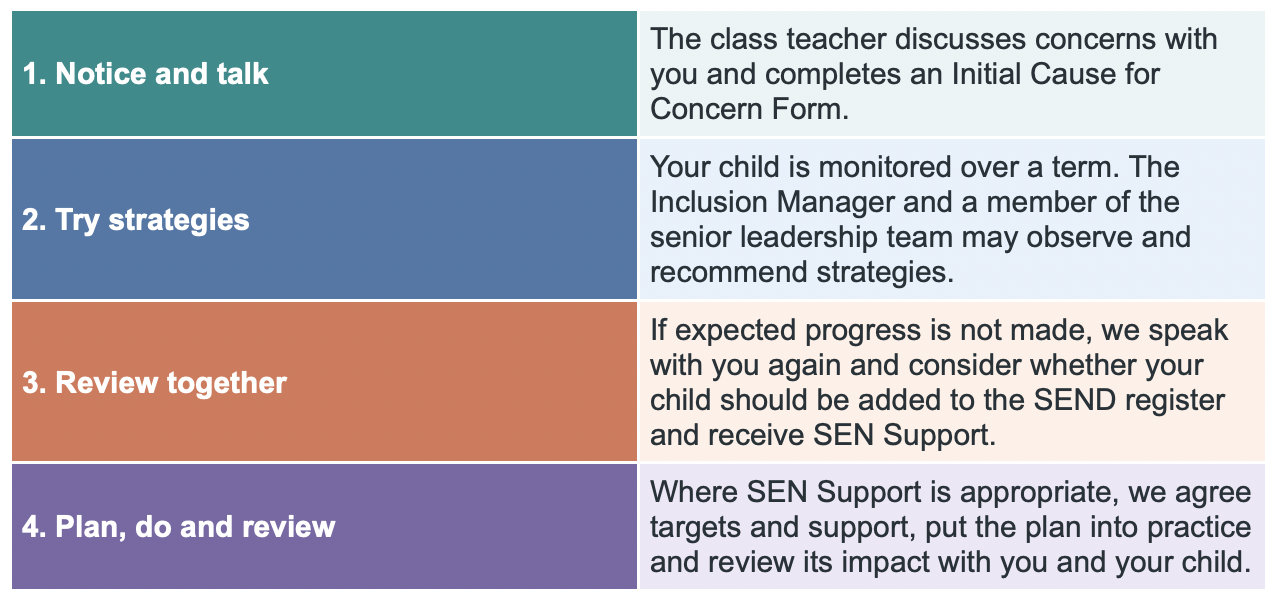
What support might my child receive?
Support depends on your child’s needs. It may include:
- Adapted classroom teaching, clear instructions, visuals and practical resources.
- Small-group or individual help with reading, writing, maths, communication, attention or social skills.
- A SEN Support Plan with individual targets, strategies and review dates.
- Wellbeing support, including ELSA, social-skills groups and play therapy through our on-site school counsellor, who works three days a week. Provision depends on need and availability.
- For some children with social, emotional and mental health needs, a wellbeing chart with three targets. The child takes it home so school and family can work together; review meetings are held with the child and parent/carer.
- ABC charts, where useful, to help staff identify what happens before and after a behaviour and consider possible triggers or unmet needs.
How will I know how my child is doing?
We share information through conversations with the class teacher, parent consultation meetings and review meetings. Progress may be considered through classwork, assessments, observations, intervention records, individual targets, confidence, independence and participation. Contact the class teacher first; a meeting with the Inclusion Manager can be arranged if needed.
How can I help?
- Tell us about your child’s strengths, interests, worries and what helps at home.
- Let us know if something changes or you notice a new difficulty.
- Share your views when targets and support are agreed or reviewed.
- Where a home–school chart or plan is used, discuss it with your child and share feedback with school.
What if my child needs specialist help?
With your involvement, the school may seek advice from services such as Educational Psychology, Speech and Language Therapy, Occupational Therapy, health services, CAMHS or Early Help. Access depends on need, referral arrangements and service criteria. If significant barriers continue despite appropriate support, we may discuss whether to consider an Education, Health and Care (EHC) needs assessment. The Local Authority decides whether to carry out an assessment.
Wellbeing, safety and inclusion
We aim for children with SEND to take part in lessons, trips and wider school life. Individual adjustments and risk assessments are considered where needed. Health care plans and additional staff training may be arranged for medical needs. We plan transitions carefully, including the move into Year 3 and from Year 6 to secondary school.
Who should I contact?
|
Start with your child’s class teacher. |
Beulah Junior School, Beulah Road, Thornton Heath, Croydon, CR7 8JF
Telephone: 020 8653 4921 | Email: office@beulah-jun.croydon.sch.uk
Croydon Local Offer: https://localoffer.croydon.gov.uk
This guide is a short introduction for families. The full SEND Information Report is below please click on the link.